News · 26 January 2025
"Investing in Real Estate in More Diversified Ways"
In this NZZ interview, Anastasia Bondareva, Head of Structuring at GenTwo, explains how the fintech pioneer makes illiquid assets, including real estate, investible.
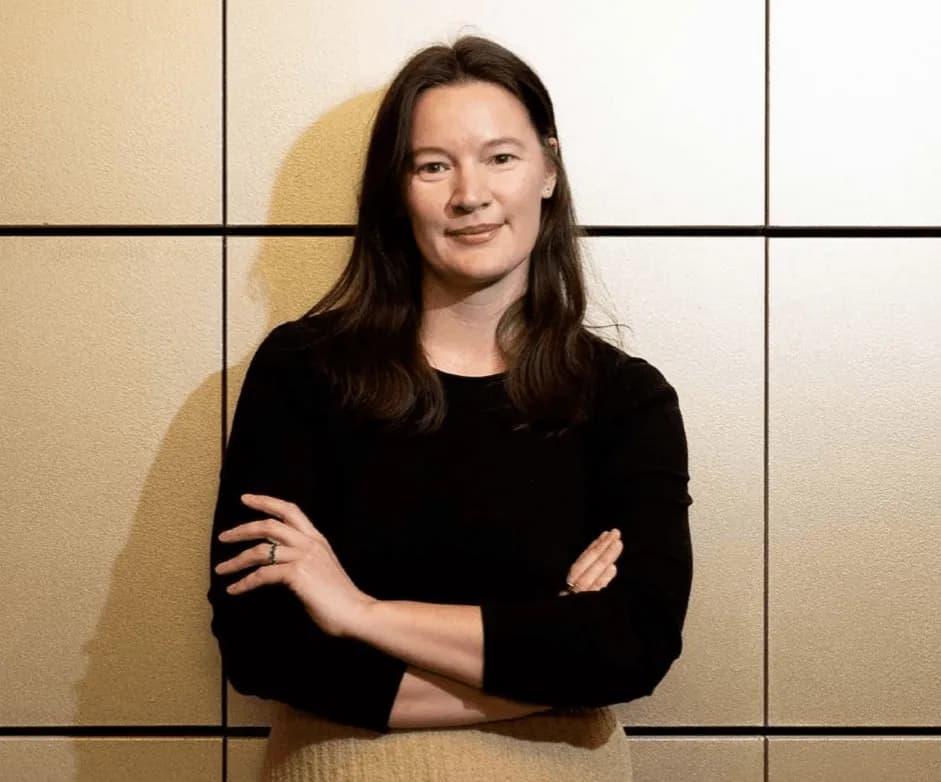
Originally published in German in NZZ on 26 January 2025.
Read the full Article (in German)
Read unofficial, AI-generated English translation*
Mrs. Bondareva, when speaking with GenTwo representatives, they point out that the company does Assetization. Many equate this with tokenization, which it isn't. What is the fundamental difference?
Anastasia Bondareva: Securitization is about using existing financial instruments with certificates that have existed for decades. Tokenization focuses on blockchain, the distributed ledger technology. We're not reinventing the wheel, but we're creating a much more efficient wrapper for the financial product. In principle though, all certificates we issue could be represented by a token on the blockchain. Whether securitization or tokenization, the underlying, the base asset, remains the same. It's just about how it's represented and where it's made tradable.
In the book "Assetization," written by the two GenTwo founders, the securitization product is compared to containers. These revolutionized transportation. Are GenTwo products similarly standardized?
In principle, it's the same - any asset that can be valued can be placed into our structure, that is, securitized, and made tradable as a certificate. We see similar potential as for ETFs, the exchange-traded index funds, which could be viewed as uniform containers for listed securities.
But how do you value the securitized assets when there's no trading - then there's no change in value and no performance?
The asset's value is defined by the current value of the underlying asset. This value is typically determined by an independent valuation agency. These valuers are selected by the client, not by us. The underlying assets may be illiquid, but sometimes secondary market transactions still occur for the products. However, these transactions at the product level don't determine the value of the underlying asset but are settled based on the last available net asset value of the product, which is based on the last available valuation of the asset.
What type of real estate is suitable for a GenTwo securitization?
Technically, any real estate on the market can be securitized - though it makes little sense for a single-family home. You have to integrate the costs for maintaining the house, the taxes incurred with the transfer to the platform, and regular valuation into the product. Most clients who approach us come through fund structures, meaning there's already a fund managing the properties. We offer a structure that reduces the minimum entry size, which can be very high. This enables clients to invest in real estate in a more diversified way. For instance, you can split the investment amount across different funds.
But the land registry entry makes real estate investments in Switzerland quite complicated.
As mentioned, it usually works through companies, funds or loans, and the investor becomes a shareholder or unitholder. So you're not investing directly in the property. There are two reasons why such solutions are chosen - the property owner wants to raise capital, and the investor wants a tailored investment solution that may also have a term. The product has the advantage of offering both interest and potential for appreciation. Here too, GenTwo is the coordinator, sets up the securitization, and ensures that payments and valuation work.
Are you already working on real estate projects in Switzerland?
GenTwo has already implemented several real estate projects here. The securitization of an apartment building in Canton Zurich is a good example of what such a project can look like. We set up an investment structure that allows the investor to invest in the apartment complex for a fixed term of three years: If interested, the investment period can be extended. We've also realized a project with so-called service chalets in a major Swiss ski area. The investor can participate in these projects through a certificate. If the property is managed in a fund structure, the client doesn't have to worry about forms, administrative matters, taxation, and similar issues. The Swiss real estate market is still very underdeveloped in terms of investability when compared to the USA and the possibilities of engaging through REITs, so-called Real Estate Investment Trusts, with just a few hundred dollars.
But I could also go to a bank and acquire a real estate fund.
The approach is different with our securitization. The bank looks at the investment from the end investor's perspective, we look at it from the asset manager or family office perspective. These know their clients' needs and select the appropriate object and come to GenTwo. We structure and securitize the appropriate, individual product for the client.
Where do you see the biggest challenge for GenTwo?
There's still a great need for education, as many investors think the certificates are our products. But they are our clients' instruments that we enable. They have ideas about what they want to make investible, that is, accessible to their clients for investments. The GenTwo name doesn't appear. They are white-label products. The end investor doesn't come into direct contact with us. We operate a business-to-business model.
In which assets are your clients currently investing the most?
About half of the investments are still in liquid securities, but their share of the total volume is decreasing because risk premiums are so high and accordingly, the return potential is lower. The market is continuously moving toward private assets.
Interview: Werner Grundlehner
GenTwo
Founded in 2018, the Zurich fintech startup GenTwo opens up new investment areas for investors through securitization and makes non-traditional assets tradable for institutional and professional investors. The financial intermediary commissions GenTwo to structure a vehicle but manages it themselves according to the mandate agreement. GenTwo builds an issuance platform for each client. This independent company is not consolidated in the balance sheet and increases security in case of bankruptcy. The assets are securitized, made tradable with a certificate - usually an actively managed one (AMC) - and receive a securities identification number (ISIN). In the book "Assetization," the company founders estimate the global volume of non-tradable assets at 78 trillion US dollars - mostly real estate.
*This translation was generated by Anthropic's Claude, and is only meant as an indicaiton of the original article. It is not a definitive version.