The Assetizer · 15 March 2024
"Assetization - The Tool to Unlock the Value of All Assets Everywhere" – Free download of Chapter 3 of Assetization
In Chapter 3, explore with Patrick Loepfe and Philippe A. Naegeli how 'Assetization' serves as the universal tool to standardize and unlock the inherent value of assets globally, akin to the transformative impact of containerization on global trade.
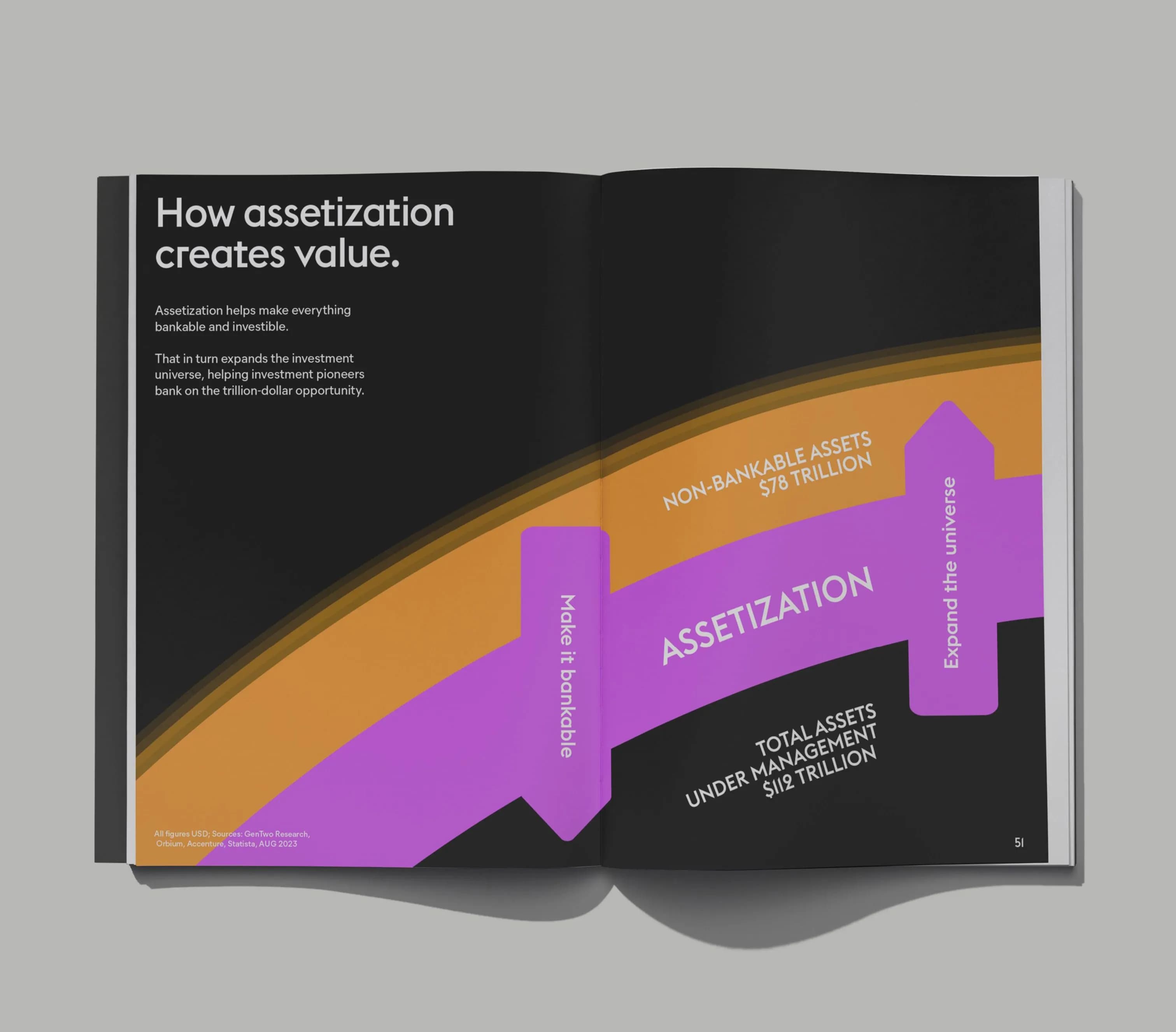
Chapter 3 draws a compelling parallel between the concept of Assetization and the historical revolution of containerization in global trade, introduced by Malcom McLean in 1956. Just as standardized cargo containers streamlined and energized global trade, Assetization proposes to revolutionize the financial world by offering a standardized 'wrapper' for securitizing any asset. For more, you can download the full chapter as a PDF.
A Quiet Revolution at Sea
On April 26, 1956, Malcolm McLean, an American businessman and owner of a successful trucking company, loaded 58 aluminium truck trailers onto a creaky old World War II vintage tanker ship called the Ideal-X that was moored in Newark, New Jersey. Soon thereafter, the ship set out on the five-day voyage to Houston, Texas. That small journey would mark a turning point in world history. McLean was the inventor of what has come to be known as containerization – the practice of shipping cargo in standardized containers that can easily be loaded and unloaded onto various modes of transportation. Their use dramatically brought down the costs and increased the speed and capacity of global shipping by road, sea, rail and air.
We often bring up this story when we are asked to explain what Assetization is, especially to people outside the financial industry. We find it makes for a very good and useful analogy on a lot of levels. Tellingly for our story, McLean's idea didn't come out of nowhere. Instead – like the iPhone App Store and the blockchain we talked about in Chapter 1 – it was the result of a remixing and rethinking of already existing ideas and approaches. Look up the history of containerization and you will learn that the practice dates back at least to 1766, when a man named James Brindley had a ship, the Starvationer, designed with ten wooden containers to transport coal in England. Over the centuries since then, containers of various kinds have been developed to make it easier to cater to many different needs, not just for ships, but also railroads, trucks and eventually aircraft.
That made for a wide spectrum of different shapes, sizes and materials, a global patchwork of custom-made containers. McLean realized this was putting the cart before the horse. The purpose of the logistics industry, as he put it, was not to "sail ships, but to move cargo".15 This led him to rethink the whole shipping process from the bottom up, looking at it from the perspective of the cargo and not the vessel.
This change of perspective led him to conclude that what the industry needed most of all was standardized containers. And he was right. Standard-sized containers can neatly and efficiently be stacked, saving space. Building them with standard locks and fittings for cranes or forklifts meant they could be easily on- and offloaded between different modes of transportation, and in different countries. All of this saved a great deal of time and effort. And that in turn saved a great deal of money. In 1956, it cost over 55 dollars per ton (in today's currency) to load cargo onto a ship manually. Within fifty years that had dropped to 21 cents per ton.
While the outsides of shipping containers are standardized, the insides can be customized to accommodate different types of cargo. Today, we have containers for dry goods, for refrigerated goods, for liquid goods, for perishables, fragile items, you name it. As long as the container conforms to the standards, transport companies can easily and e!iciently move them from point A to point B.
This might not seem like much in and of itself. But containerization has been credited not only with revolutionizing the shipping industry, but with being a prime driver of globalization during the second half of the 20th century. It has had an immeasurable impact on the global economy. When McLean died in Manhattan in 2001, Forbes magazine called him "one of the few men who changed the world." This was not an exaggeration...